
 By Happy Paws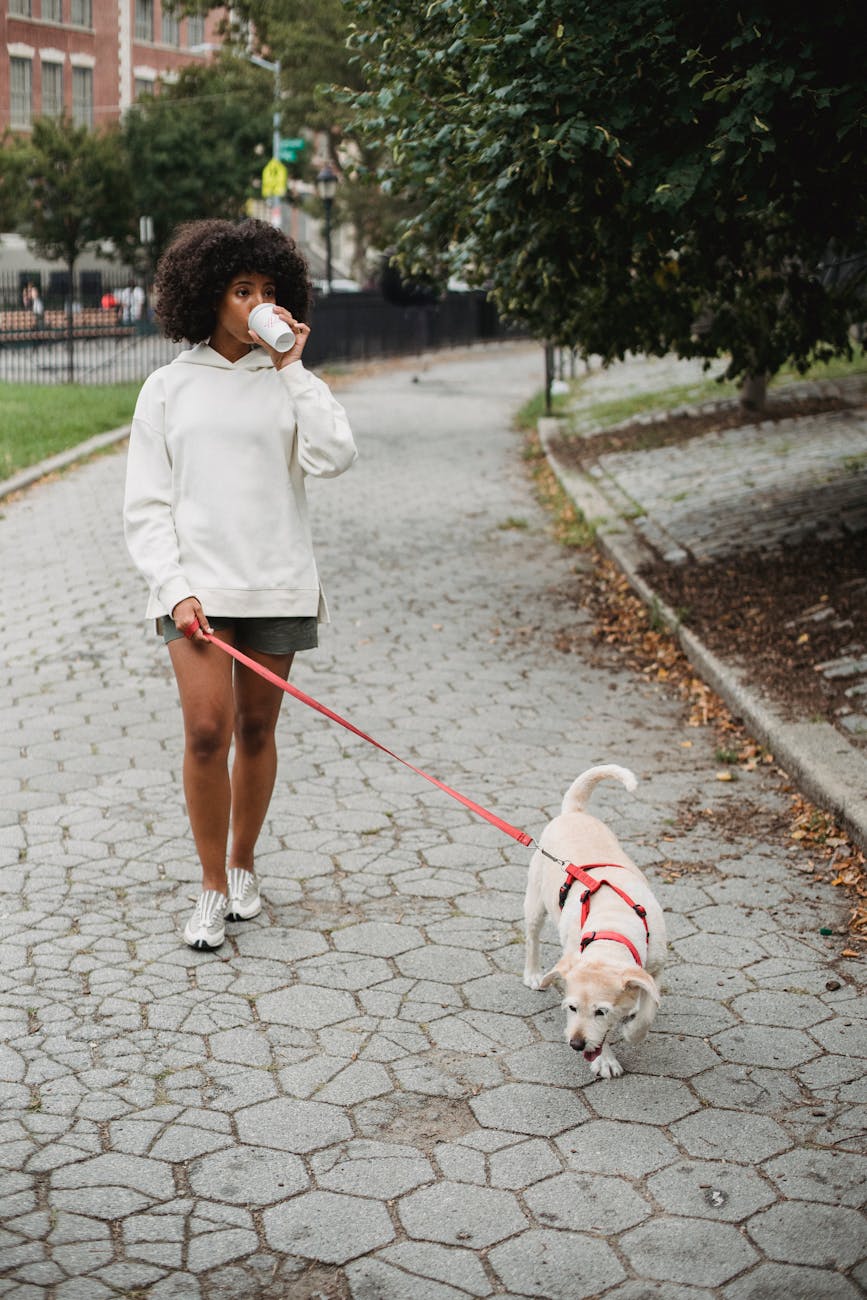
Walking your dog should be one of life’s simple pleasures—a peaceful moment of bonding while exploring the neighborhood together. However, if your furry companion transforms into a sled dog the moment you clip on the leash, those walks can quickly become a frustrating tug-of-war that leaves both you and your pet exhausted and stressed.
Leash pulling is one of the most common behavioral challenges dog owners face, with studies showing that pulling behavior is a significant factor in pet relinquishment to shelters. The good news is that with the right techniques, equipment, and patience, you can transform your pulling pup into a polite walking partner. This comprehensive guide will provide you with science-backed methods and proven strategies to achieve loose-leash walking success.
Understanding Why Dogs Pull on the Leash
Before diving into solutions, it’s crucial to understand the underlying reasons behind pulling behavior. Dogs don’t pull to be dominant or defiant—they pull because it works. When your dog pulls forward and reaches their desired destination (that interesting smell, another dog, or simply moving forward), they’re being rewarded for the pulling behavior.
The most common reasons dogs pull include:
- Natural pace differences: Dogs naturally walk much faster than humans, making our pace feel painfully slow to them
- Excitement and curiosity: The outside world is full of fascinating scents, sights, and sounds that capture their attention
- Lack of training: Many dogs simply haven’t been taught proper leash manners
- Reinforcement history: If pulling has successfully gotten them where they want to go in the past, they’ll continue the behavior
Research shows that dogs pull significantly more when wearing back-attachment harnesses compared to collars, with one study finding dogs pulled with greater maximum tension (16.87N vs 6.97N) and for longer periods when using harnesses for food attraction tasks.
The Science-Based Approach to Leash Training
Positive reinforcement training has proven to be the most effective and humane method for teaching loose-leash walking. This approach focuses on rewarding desired behaviors rather than punishing unwanted ones, creating a dog that wants to walk nicely rather than one that’s forced to do so.
The Foundation: Positive Reinforcement Principles
Modern dog training emphasizes reward-based methods that strengthen the human-dog relationship while achieving training goals. The key principle is simple: behaviors that are rewarded will be repeated. When your dog experiences something good (treats, praise, forward movement) for walking on a loose leash, they’re more likely to offer that behavior again.
Professional trainers and veterinary organizations consistently recommend positive reinforcement over aversive methods like choke chains or prong collars. These punishment-based tools can damage your relationship with your dog and may worsen behavioral issues.
Essential Equipment for Leash Training Success
Choosing the right equipment can dramatically improve your training success and make the process more comfortable for both you and your dog.
No-Pull Harnesses: The Game Changer
Front-clip harnesses are scientifically proven to reduce pulling behavior. Recent research comparing four types of leash equipment found statistically significant differences in pulling force between different harness types. Front-attachment harnesses work by redirecting your dog’s forward motion toward you when they pull, making it physically difficult to continue pulling.
Featured Product: HALTI No-Pull Harness
The HALTI No-Pull Harness is consistently rated as the top choice by professional trainers and dog behaviorists. This harness features a unique “squeeze and lift” mechanism that gently tightens when dogs pull, providing immediate feedback without causing discomfort. The padded straps ensure comfort during extended walks, and the dual attachment points allow for both training and casual walking modes.
User reviews consistently praise the HALTI‘s effectiveness: “This harness definitely prevents any extra pulling and enabled better control during our walks,” reports one tester. The harness is particularly effective for strong, large dogs where control is essential for safety.
Featured Product: Rabbitgoo No-Pull Pet Harness
For budget-conscious owners, the Rabbitgoo harness offers excellent value with both front and back attachment points, four adjustable straps, and reflective strips for visibility. Available in over 20 colors and sizes from XS to XL, this harness accommodates dogs of all sizes while providing the no-pull benefits of front-clip design.
Professional Training Tools
Featured Product: Dog Training Treat Pouch
A quality treat pouch is essential for effective training, allowing you to reward good behavior instantly without fumbling for treats. The Pupford Training Treat Pouch features a magnetic closure that automatically snaps shut, keeping treats secure while allowing quick access during training sessions. The built-in poop bag dispenser and zippered pocket for personal items make it a complete training solution.
Professional trainers recommend treat pouches with easy one-handed access and secure closures. The Terry Ryan Treat Pouch, rated “Best Bait Bag” by Whole Dog Journal, features a super-strong hinge design that stays open for easy treat access while remaining durable enough for professional use.
Step-by-Step Training Protocol
Phase 1: Foundation Building (Days 1-3)
Start indoors in a distraction-free environment. This allows your dog to learn the basics without competing stimuli that might cause excitement or pulling.
Day 1: Equipment Introduction
- Allow your dog to wear the harness during pleasant activities like feeding or playtime
- Practice putting on and removing the equipment while offering treats and praise
- Create positive associations with the training gear before attempting any leash work
Day 2: Leash Pressure Response
- Attach the leash and apply gentle pressure in different directions
- The moment your dog yields to pressure (even slightly), release it immediately and reward
- Practice this in all directions—forward, backward, left, and right
Phase 2: Basic Commands (Days 3-5)
Teach essential commands that form the foundation of good leash manners:
“Let’s Go” Command
- Use this for casual walking where your dog has more freedom but still walks with you
- Start moving forward while saying “let’s go” and reward your dog for following
- If they pull ahead, stop immediately and don’t move until the leash is loose
“Heel” Command
- This teaches your dog to walk directly beside you
- Start with your dog sitting at your side, then move forward with the command “heel”
- Reward continuously for staying in position
Phase 3: Real-World Application (Days 6-7 and Beyond)
“The Stop and Start Method”
This technique is the cornerstone of effective loose-leash training:
- Begin walking at your normal pace
- The moment your dog pulls and the leash becomes tight, immediately stop walking
- Stand still and quiet until your dog pays attention to you or the leash loosens
- The instant the leash relaxes, praise your dog and resume walking
- Repeat this process consistently—every single time the leash becomes tight
Professional trainers emphasize the importance of timing: you must stop immediately when the leash tightens, not after your dog has already reached their destination. This prevents rewarding the pulling behavior.
Advanced Techniques for Persistent Pullers
The U-Turn Technique
When your dog pulls, immediately turn around and walk in the opposite direction. This teaches your dog that pulling actually slows progress rather than speeding it up. The key is to make the turn quick and confident while calling your dog in a happy voice.
Environmental Management
“Make the area around you fun and rewarding” by:
- Using high-value treats that your dog finds irresistible
- Engaging in random pattern walking instead of predictable straight lines
- Varying your pace to keep your dog’s attention on you rather than the environment
Common Training Mistake: Walking too slowly. Dogs naturally move faster than humans, and walking at an unnaturally slow pace makes it even harder for them to match your speed. Maintain your natural walking pace and reward your dog for matching it.
The Role of Positive Reinforcement Tools
Clicker Training for Precision
While clicker training doesn’t show superior results over other positive reinforcement methods for simple behaviors, it can be valuable for precise timing of rewards. The immediate “click” provides clear feedback about exactly which behavior earned the reward.
Recent research comparing clicker training to verbal praise and food-only rewards found that all three methods were equally effective for teaching new behaviors. However, clicker training may be beneficial when you need precise timing or when training complex behaviors that require shaping.
High-Value Rewards
Not all treats are created equal for training purposes. Research and professional trainers recommend using “high-value” treats that your dog finds irresistible. These might include:
- Small pieces of cooked chicken or turkey
- Freeze-dried liver treats
- Small cubes of cheese (if your dog tolerates dairy)
- Tiny pieces of hot dogs (low-sodium varieties)
The key is using small, soft treats that can be eaten quickly without interrupting the training flow.
Troubleshooting Common Challenges
Problem: Dog Pulls Despite Consistent Training
Solution: Increase the value of your rewards and ensure you’re being consistent with stopping every time the leash tightens. Consider whether your dog is getting enough physical and mental exercise before walks, as excess energy can contribute to pulling.
Problem: Dog Only Behaves During Training Sessions
Solution: This indicates a need for better generalization training. Practice in different environments, times of day, and with varying distractions to ensure your dog understands the behavior is expected everywhere.
Problem: Family Members Aren’t Consistent
Solution: Consistency is crucial for success. All family members must follow the same training protocols, or your dog will become confused about expectations. Create a simple training plan that everyone can follow consistently.
Timeline and Expectations
Most dogs show initial improvement within 7-14 days of consistent training. However, achieving reliable loose-leash walking typically takes 4-8 weeks of regular practice. The key factors affecting timeline include:
- Consistency of training across all family members
- Dog’s age (puppies typically learn faster than adult dogs with established pulling habits)
- Previous training history and reinforcement of pulling behavior
- Quality and frequency of training sessions
Remember that this is a gradual process that requires patience and consistency. Dogs with years of reinforced pulling behavior will take longer to retrain than puppies learning for the first time.
Professional Support Options
If you’re struggling with persistent pulling despite consistent training, consider seeking help from a certified positive reinforcement dog trainer. Professional trainers can identify specific issues with your technique and provide personalized solutions for your dog’s unique challenges.
Look for trainers certified through organizations like the Certification Council for Professional Dog Trainers (CCPDT) or those who explicitly use positive reinforcement methods. Avoid trainers who recommend punishment-based tools like shock collars or prong collars, as these can worsen behavioral issues and damage your relationship with your dog.
Creating Long-Term Success
The goal isn’t just to stop pulling—it’s to create a dog who enjoys walking with you. This happens when walks become rewarding experiences filled with interesting smells, appropriate exploration time, and positive interactions with you.
Build in “sniffing breaks” where your dog can explore interesting scents as a reward for good walking behavior. This satisfies their natural curiosity while maintaining your control over the walk structure.
Consider your dog’s individual needs: a high-energy Border Collie will require different management than a leisurely Basset Hound. Adjust your expectations and training approach to match your dog’s breed characteristics and energy level.
The Investment in Better Walks
Teaching your dog to walk politely on a leash is one of the most valuable skills you can invest time in developing. Good leash manners improve your dog’s safety, make walks more enjoyable for both of you, and strengthen your bond through positive training interactions.
With the right equipment, consistent training methods, and patience, any dog can learn to walk on a loose leash. The key is understanding that this is a process, not an overnight transformation. Every step forward (literally) brings you closer to the peaceful, enjoyable walks you and your dog both deserve.
Remember that loose-leash walking is not just about obedience—it’s about communication, partnership, and mutual respect. When your dog chooses to walk with you rather than being forced to, you’ve achieved something far more valuable than simple compliance: you’ve built a relationship based on trust and positive experiences that will enhance every aspect of your life together.
SOURCES:
- https://www.mdpi.com/2076-2615/6/5/34
- https://resources.sdhumane.org/Resource_Center/Behavior_and_Training/Dogs_and_Puppies/Training_Should_Be_Fun/Training_Tips:_Loose_Leash_Walking
- https://www.barkbusters.ca/2025/08/04/how-to-train-a-dog-that-pulls-on-the-leash/
- https://www.thatmutt.com/2014/11/16/top-5-loose-leash-walking-mistakes/
- https://happyhoundsdogtraining.ca/5-common-loose-leash-dog-walking-mistakes/
- https://fenrircanineleaders.com/blogs/articles/7-day-leash-training-mastery-guide
- https://pmc.ncbi.nlm.nih.gov/articles/PMC8450523/
- https://pmc.ncbi.nlm.nih.gov/articles/PMC7895348/
- https://summerbrookgoldens.com/stop-leash-pulling-with-positive-reinforcement/
- https://peerj.com/articles/18131
- https://pmc.ncbi.nlm.nih.gov/articles/PMC11512810/
- https://canadapooch.com/blogs/news/do-front-clip-harnesses-work
- https://www.k9magazine.com/halti-no-pull-harness-review-does-it-actually-stop-dogs-pulling/
- https://www.smartbark.co.uk/post/best-dog-harness
- https://www.goodhousekeeping.com/life/pets/g28198571/best-dog-harnesses/
- https://pupford.com/products/dog-training-treat-pouch
- https://buynobaddogs.com/products/treat-pouch
- https://www.cleanrun.com/category/dog_training_supplies_books_dvds_and_behavior/bait_bags_and_treat_pouches_for_dog_training/index.cfm
- https://tinashappyhounds.dk/?p=527
- https://www.rspca.org.uk/adviceandwelfare/pets/dogs/training/walknicely
- https://www.youtube.com/watch?v=2KkWAAICee0
- https://pmc.ncbi.nlm.nih.gov/articles/PMC7906040/
- https://journal.iaabcfoundation.org/does-clicker-training-lead-to-faster-acquisition-of-behavior-for-dog-owners-it-depends-on-the-behavior/
- https://pupford.com/blogs/all/21-common-dog-training-mistakes
- https://www.happyhounduniversity.com/client-reviews
- https://www.semanticscholar.org/paper/11e27d1c3bae811684ebae089403ad0af2bf0019
- https://www.semanticscholar.org/paper/e2a7b6116852591378c1becc670567aa1add5704
- https://www.semanticscholar.org/paper/fb83c3bdc6c21e6d1b5ae1e773cc8f0f3236fc80
- https://pmc.ncbi.nlm.nih.gov/articles/PMC7438591/
- https://www.mdpi.com/2308-3417/7/6/120/pdf?version=1666604851
- https://www.frontiersin.org/articles/10.3389/fvets.2021.646022/pdf
- https://linkinghub.elsevier.com/retrieve/pii/S155878782200137X
- https://www.frontiersin.org/articles/10.3389/fvets.2021.735680/pdf
- https://pmc.ncbi.nlm.nih.gov/articles/PMC11939286/
- https://pmc.ncbi.nlm.nih.gov/articles/PMC11083790/
- https://www.tandfonline.com/doi/pdf/10.1080/10888705.2023.2259796?needAccess=true
- https://pmc.ncbi.nlm.nih.gov/articles/PMC9680302/
- https://pmc.ncbi.nlm.nih.gov/articles/PMC7387681/
- https://pmc.ncbi.nlm.nih.gov/articles/PMC7908228/
- https://www.frontiersin.org/articles/10.3389/fvets.2020.00508/pdf
- https://pmc.ncbi.nlm.nih.gov/articles/PMC12024356/
- https://canadapooch.com/blogs/news/the-benefits-of-using-a-no-pull-dog-harness
- https://www.gopetfriendly.com/blog/no-pull-dog-harnesses/
- https://companyofanimals.com/uk/brand-product/halti-no-pull-dog-harness/
- https://careanimalhospital.com/2025/02/26/loose-leash-walking-tips/
- https://www.dogstrust.org.uk/dog-advice/training/outdoors/walking-nicely-training
- https://www.akc.org/expert-advice/training/expert-tips-dog-leash-issues/
- https://www.semanticscholar.org/paper/bd8220dc58f68bdfdc6dd7ab75a127321b0557f2
- https://www.semanticscholar.org/paper/98165875266c31a24827a2282a08cbf4aaa49abc
- https://cbtdogbehaviour.com/best-dog-training-products/
- https://www.reddit.com/r/dogs/comments/1hxo4z8/interesting_recent_2024_study_done_on_dog/
- https://alpinedogco.ca/blogs/dog/the-best-no-pull-harness-for-dogs
- https://ohmydogblog.com/2024/08/positive-reinforcement-dog-training-tools/
- https://www.nytimes.com/wirecutter/reviews/best-dog-harness/
- https://k9connoisseur.com/blogs/news/dog-training-tools
- https://ellasanimals.org/public-access-training/my-favorite-equipment-for-dog-training/
- https://jurnal.unimed.ac.id/2012/index.php/gorga/article/view/43343
- https://www.semanticscholar.org/paper/117d4e8c4fa76a8abd3695c2979858a66cf588c5
- https://www.semanticscholar.org/paper/29f4398c6c150a06a0837dbe7222ab0b12ae636c
- https://www.semanticscholar.org/paper/f226fdbc4833247cfc1e75040a9bdd87f171a1b8
- https://journals.lww.com/00004669-201604000-00005
- https://academic.oup.com/jpp/article/20/12/941/6202209
- https://www.semanticscholar.org/paper/272f38ff5cb1868db1724da30fd3de951f2a3752
- https://www.semanticscholar.org/paper/e8d6e64bbc32a7b64c7307c3c29e20b2c98f2ef7
- http://www.thieme-connect.de/DOI/DOI?10.1055/s-0043-1769920
- https://www.semanticscholar.org/paper/4a66f7ae0721ca4fd0e239dc22a4ecbcb5aef306
- https://pmc.ncbi.nlm.nih.gov/articles/PMC9120285/
- https://www.doog.com.au/collections/dog-training
- https://www.reddit.com/r/Dogtraining/comments/37tm18/leash_pulling_problems_dog_doesnt_respond_to/
- https://pk9gear.com.au/collections/treat-pouch
- https://ruffwear.com/products/treat-trader-dog-treat-bag